The LARMAG Group was founded by Lars-Erik Magnusson, an entrepreneur with exceptional vision who saw potential where others did not. His philosophy of strategic investment in emerging markets combined with careful attention to timing resulted in the development of a diverse portfolio spanning multiple sectors.
From the company’s early beginnings in commercial real estate to its later expansion into technology infrastructure and sustainable energy, Lars-Erik’s forward-thinking approach has been the cornerstone of LARMAG’s success over five decades.
Lars-Erik Magnusson established LARMAG with a clear vision: to identify undervalued assets with long-term potential, especially in markets experiencing transformative change. His philosophy combined traditional investment principles with an intuitive understanding of emerging trends.
What set his approach apart was a willingness to enter markets others considered risky, backed by thorough analysis and strategic timing. This methodology created a foundation for sustainable growth that continues to guide LARMAG today.
The 1980s marked LARMAG’s first significant international expansion, with strategic investments in key European markets. By focusing on commercial properties in cities undergoing economic revitalization, LARMAG established a pattern of identifying value opportunities before mainstream recognition.
During the 1990s, Lars-Erik guided the company through its first major portfolio diversification, establishing investments in shipping and infrastructure that complemented the core real estate holdings. This diversified approach provided stability through various market cycles.
1972:Company founded with initial focus on Dutch commercial real estate
1985:First major international expansion into German markets
1993:Portfolio diversification into marine infrastructure
2006:Strategic consolidation of assets in Western Europe
2015:Investment in technology-enabled real estate solutions
2021:Launch of the Habitat AI Project
Lars-Erik Magnusson began his entrepreneurial journey in 1975 in Sweden, establishing the foundation for what would become the LARMAG Group. He officially founded the LARMAG Group in the Netherlands in 1985, bringing his vision for strategic investment and market analysis to a broader European stage.
His leadership style emphasized strategic patience, thorough market analysis, and a commitment to identifying structural shifts in markets before they became widely recognized. His approach to business relationships valued integrity and long-term partnerships over short-term gains.
In 2004, Lars-Erik Magnusson was appointed Consul General of Sweden, further cementing his international leadership and diplomatic presence. This leadership philosophy created a corporate culture at LARMAG that continues to prioritize careful analysis, strategic timing, and ethical business practices. The company’s longevity and consistent performance across five decades stand as testament to the soundness of this approach.
LARMAG Group has evolved from a focused commercial real estate investment firm to a diversified international enterprise. Founded by Lars-Erik Magnusson in the early 1970s, the company built its reputation through strategic acquisitions in key European markets.
The company’s approach combines traditional investment wisdom with innovative technologies and sustainable practices. This balanced perspective has enabled LARMAG to navigate changing market conditions while maintaining consistent growth over five decades.
Today, LARMAG continues to expand its portfolio with investments in commercial real estate, technology infrastructure, and sustainable energy projects. The company’s international presence and diversified holdings reflect the global vision established by its founder.
Innovation
Pioneering new approaches to traditional industries and embracing emerging technologies.
Sustainability
Committed to environmentally responsible investments and reducing carbon footprint across our portfolio.
Global Vision
Maintaining an international perspective that identifies opportunities across diverse markets and cultures.
Ethical Governance
Upholding the highest standards of corporate conduct, transparency, and responsible investment practices.
Our History
2006 – 2008
Properties in Germany
As of the second quarter of 2003, Mr. L.E. Magnusson and the Larmag Group made new plans for a new real estate investment company, this time Larmag being the controlling shareholder. The main objective for this property investment company was to focus on real estate with the highest possible return without compromising the quality and assurance of a secured long-term stable income stream.
This has been an important factor since the Larmag Group intends to pay, in the future, an attractive annual dividend to its present and future new shareholders without jeopardising the annual income to support the company’s fixed payment such as interest, amortisation on mortgage, senior debt, interest on the junior mezzanine debt and maintenance and management costs etc. In the present market, the German real estate market seems to be the best market to meet these objectives. Larmag will focus on offices, shopping centers and warehouses as well as residential apartment buildings.
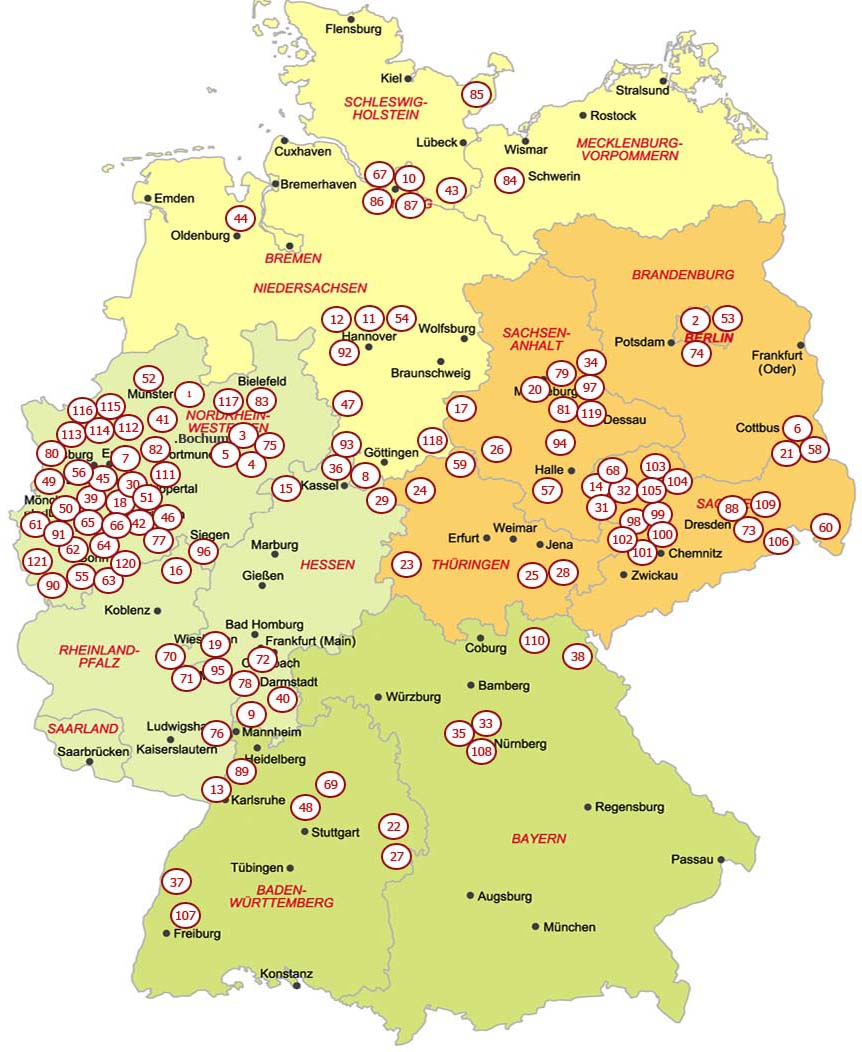
As of the beginning of 2004, the Larmag Group has been very actively pursuing and focussing on investments in the German real estate market. As a result of this, the first acquisition took place in February 2005 of a 25,000 m2 newly built shopping center in Berlin and 376 apartments in Munster and at the end of December 2005, the Larmag Group acquired a portfolio of 14 office and warehouse buildings in Germany with a total surface of approximately 61,500 m2.
Properties in Germany owned by Larmag
1997 – 2003
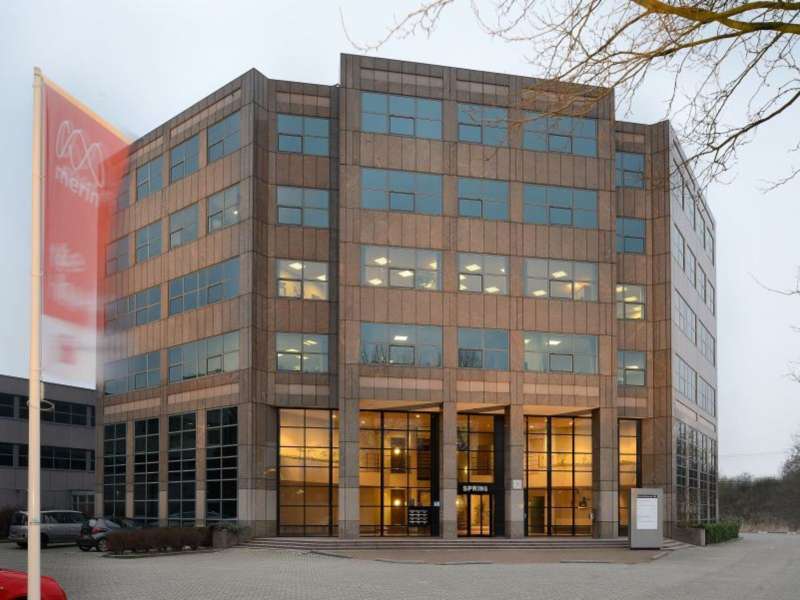
Overschiestraat 186
In February 1997, Larmag acquired a major interest in Probus Estates PLC, a small real estate company listed on the London Stock Exchange. The successful Magna Plaza Shopping Center was sold to Probus Estates in exchange for the issue of new Probus Estates shares. A major restructuring programme within Probus Estates was carried out which had a positive effect on the company’s profile.
This restructuring programme included the acquisition of new real estate with positive cash flows and the disposal of existing unprofitable real estate, which had burdened the company in the past. The effect of the restructuring programme has been to create a focused real estate group with a portfolio of high quality commercial properties, mainly in The Netherlands.
Other high quality opportunities throughout the rest of Europe were also explored. The focus was not only on commercial properties but also included leisure related projects. In November 1997, Probus Estates concluded a transaction to acquire a real estate portfolio for Euro 29.1 million. This real estate portfolio included two office buildings and two warehouse and office complexes in Amsterdam and the surrounding areas.
In June 1998, Probus Estates acquired a further six office buildings in the vicinity of Amsterdam. For the first time in its history, Probus Estates’ revenues exceeded expenditure. It was the policy of Probus Estates to pursue investment opportunities in Europe that showed good returns and sound growth potential.
Overschiestraat 186, Amsterdam, The Netherlands
In May 1999 Probus Estates sold its subsidiary Premag Holding B.V. with a substantial profit to a Dutch public investment fund for a total amount of EURO 127.5 million. Premag Holding’s portfolio consisted of 14 properties in the Netherlands, including the Magna Plaza Shopping Centre in Amsterdam.
After Probus sold the above-mentioned real estate, in the year 2000 the company Probus acquired five commercial properties in The Netherlands for approximately EURO 35 million and at the end of the year Probus acquired the Casino de Mallorca for EURO 22 million located 15 minutes from Palma, including 52,000 m2 of prime land at the seaside where the casino building is located. The idea was to move the Casino to another location and sell it, and develop the 52,000 m2 landsite at the seaside.
During the years 2001 and 2002 Probus made further acquisitions in Spain being a development of a shopping center in Santa Ponsa, Mallorca for EURO 10 million. At the end of 2001, Probus acquired a 2 million m2 prime development site for residential development 20 km west of Barcelona, Spain. Further plans for the Casino were to prepare for the redevelopment of the Casino site as well as the residential land in Barcelona.
Probus Estates was the main real estate vehicle for the Larmag Group between 1997 up to January 2003 in which time L.E. Magnusson resigned from the Management and the Board of Probus Estates due to a difference of opinion on how to develop the business in general and in particular with the Casino and the land in Barcelona. At this time Mr. Magnusson left the company and Larmag’s shareholding was approximately 26%.
1985 – 1996
Ariel-Beta portfolio
In December 1985, a few months after its inception, Larmag acquired a large portfolio on the Dutch property market; the Ariel Beta portfolio. This portfolio, purchased for Euro 82.7 million, included office buildings in various locations in Amsterdam, Rotterdam, Frankfurt and Paris. Larmag took over management of the portfolio and in less than a year, in October 1986, successfully completed the reorganisation and sale of the portfolio.
Pronam
Encouraged by this success, Larmag extended its interests in The Netherlands. In October 1986, Larmag acquired a controlling interest in Pronam NV, a company listed on the Amsterdam Stock Exchange. At the beginning of 1987, Larmag placed all its recently acquired property, with a value of Euro 78.2 million, under the umbrella of Pronam. This was the first step in Larmag’s plan to make Pronam the basis for future property investments and to attract additional finance for ongoing investment opportunities.
During 1987, approximately 740,000 new shares in Pronam were issued at a price of Euro 56.4 per share to part finance acquisitions totaling Euro 159.1 million. Among these acquisitions were two of the three Rotterdam Europoint Towers. The total assets of Pronam rose from Euro 1.4 million at the beginning of 1987, to Euro 272.7 million at the end of that same year. At that point, the total property portfolio amounted to 350,000 m2, with a yearly rental income of Euro 24.5 million.
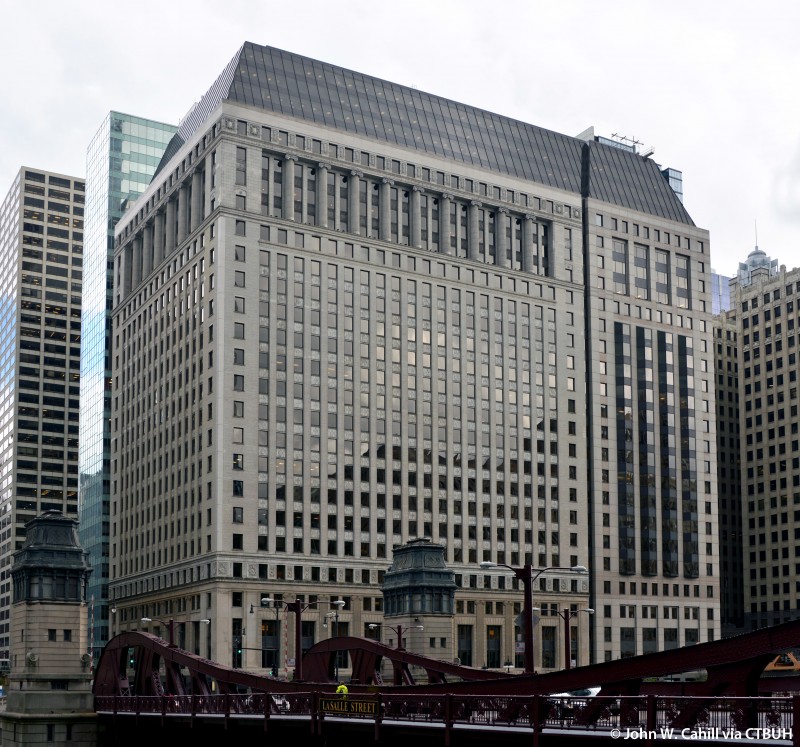
222 North Lasalle Street, Chicago, United States
By mid 1988, Pronam shares had risen on the Amsterdam Stock Exchange from a low of Euro 40.90 in November 1987 (one month after Black Monday) to Euro 70.90. Mr. Magnusson commenced negotiations to sell Pronam to a Swedish investment company.
In the summer of 1988, the sale of Pronam was concluded for a total value of Euro 283.6 million, giving the company a net value of more than Euro 90 per share. This sale generated a 60% return on shareholders’ equity over a period of only one year.
Dala Holding
In the summer of 1987, Larmag acquired 100% of a Dutch investment company, subsequently renamed Dala Holding NV. During 1987 and 1988, the company acquired several prime office buildings with a total surface area of some 60,000 m2 mostly in Amsterdam. After the sale of Pronam, Mr. Magnusson, as Chief Executive of Dala Holding, concentrated most of his activities in Dala Holding. Several new buildings were acquired in Amsterdam and Brussels, which were sold at a substantial profit in early 1989.
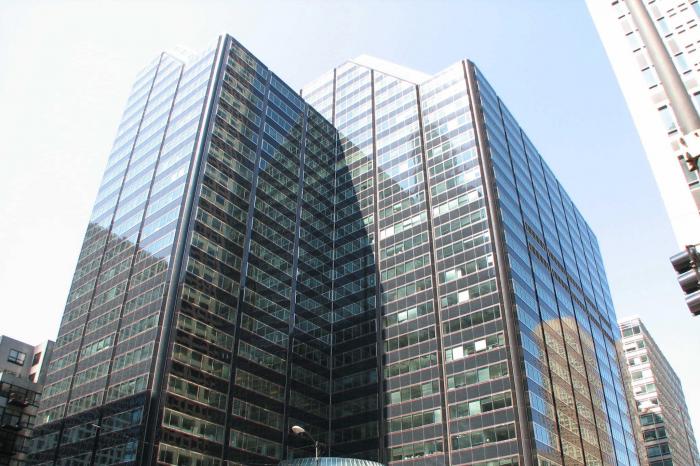
525 West Monroe Street, Chicago United States
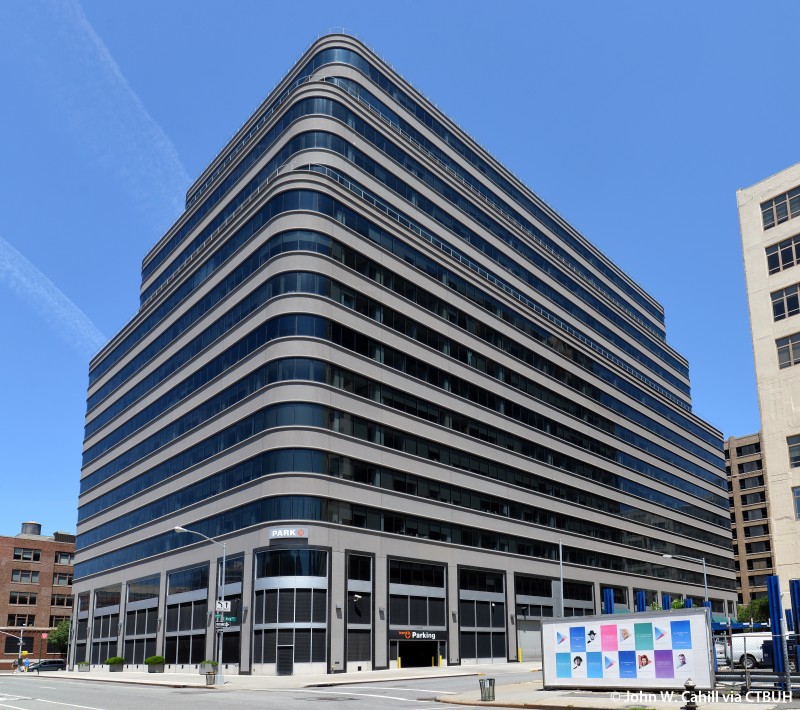
In the spring of 1989, Dala Holding acquired one large office building in New York City and two in Chicago for a total value of US$630 million. This transaction is believed to be one of the largest real estate transactions by a European investor in the U.S.A. The total office space acquired amounted to approximately 300,000 m2. In early 1989 Dala Holding also acquired prime property in the West End of London, at 16-18 Connaught Place.
375 Hudsonstreet, New York United States
The Head Post Office
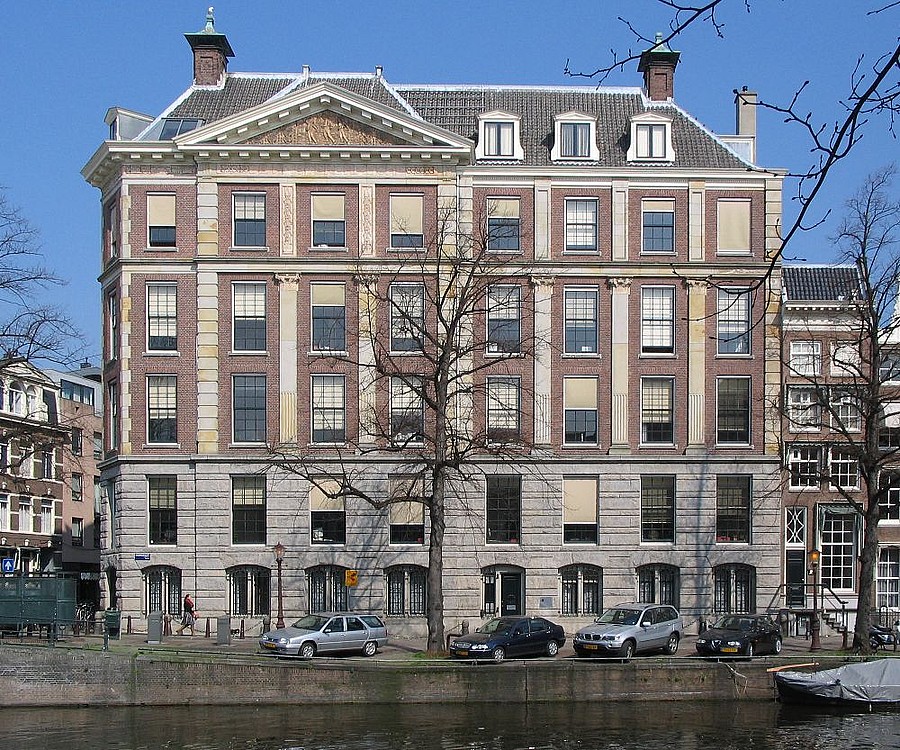
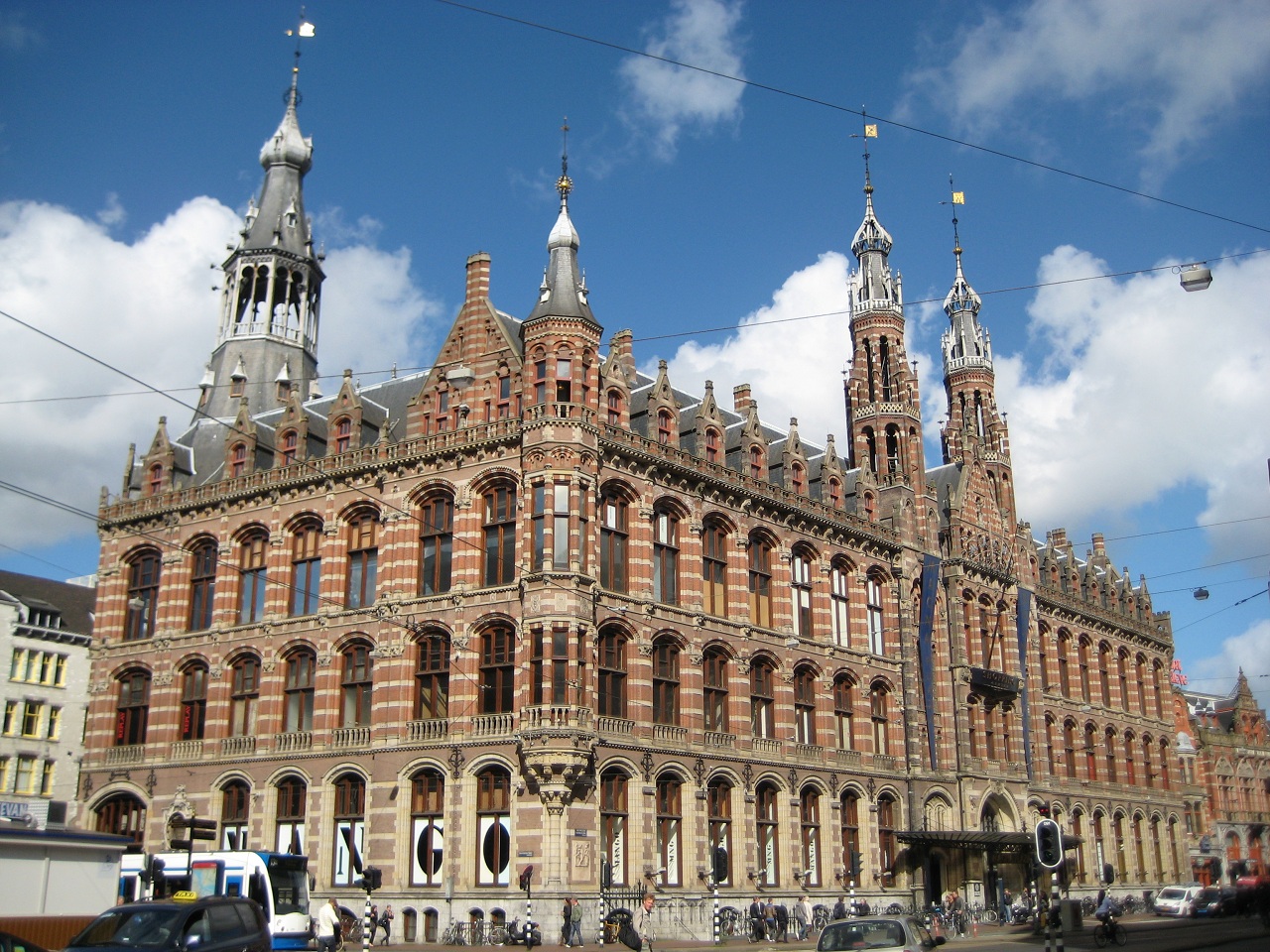
In mid 1988, Larmag acquired the Head Post Office building in Amsterdam from the Dutch Post Office & Telephone company (P.T.T.). It is one of the largest remaining historic buildings in the center of the old city, situated directly opposite the Royal Palace, which is on Dam Square, the heart of Amsterdam. The construction of this magnificent building was completed in 1899. It is built in typical neo-gothic style and was designed by the famous Dutch government architect, Cornelis Hendrik Peters (1847-1932).
Head Post Office, Nieuwezijds Voorburgwal 182, Amsterdam, The Netherlands
The Redevelopment
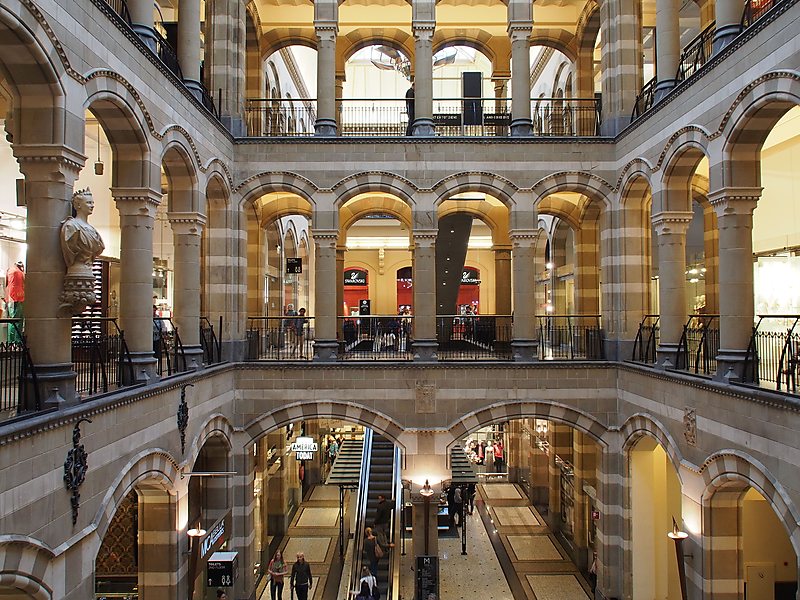
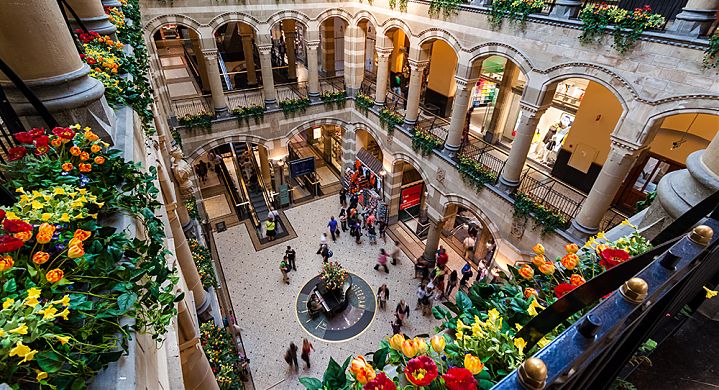
During 1990 and 1992, Larmag carried out a magnificent renovation and rezoning scheme which transformed what was once the Head Post Office, with counter functions on the ground floor and offices at the top, into a state of the art shopping center. Much attention was paid to recapturing the original style and character of the building.
Magna Plaza
By far the most radical change took place to the interior of the building. Not only was the foundation, which was completely rotten, replaced but also practically the whole interior of the building was stripped and completely refurbished.
Through the removal of ceilings and floors and very thick supporting walls, two new atriums were created on either side of the existing atrium in the main hall. This created a more spacious atmosphere, which is intensified through the enlargement of the glass-domed roof, allowing for more daylight. The two new atriums are separated from the main atrium by bridges adjoining the galleries. In this way the central area of the building melts into one large open space around which the shops are situated.
Magna Plaza
The most significant alteration to the outside of the building was the main entrance, which was somewhat inaccessible and not suitable for the building’s new purpose. Therefore the narrow passages on both sides of the entrance were widened and the access from street level improved by the erection of easy to climb steps, an escalator and a lift. This also provided access to the disabled.